When I was flying with the Air Marshals, I averaged anywhere from 2–5+ trips a week (sometimes 3x that much) depending on location. When you travel this much, you learn fast what works and what doesn’t. Through training and experience I created a system of basic concepts that acted as the foundation for how I travel, even today. The system creates guardrails to act between and is scalable to any trip, no matter the destination, length, or why I am traveling. It also allows me to remain more flexible and resilient to handle any changes quickly.
Everyone will have a different system based off their own needs and dynamics of a trip. Below are three basic concepts I used both individually and amongst the teams I traveled with for you to consider implementing into your travel routine.
PACKING CONSIDERATIONS
Think of “layers” of packing as different layers of resilience.
1st Line
Items you’ll always keep on your body and in your control. This includes going to the bathroom or if you must evacuate quickly. A fanny pack works well, but any small bag will do.
IDs / Passports
Money / Credit Cards
Phone(s) and charger
Notepad or paper with safety contacts, addresses, etc.
Business docs (thumb drives)
Medical – maybe a small tourniquet
Keep it light. Find out what works for you and what can move to the 2nd line. This will change every trip.
2nd Line
Think backpack or small carry-on. “Keep it close, grab it fast.” Pack your travel clothes here to avoid checking a bag when you can. Keep a sub-pouch for sustainment and business docs inside.
Extra clothing or layers, workout clothes (travel back outfit + shower kit)
Photocopy of your passport
Water bottle
Business documents / papers
Medical kit
Jewelry / Valuable items
3rd Line
Checked luggage. Use only when absolutely necessary. Extra clothing and anything that won’t fit in your carry-on.
COMMUNICATIONS
Start a group message with your travel team. This is your mini-Ops center for communication and situational awareness.
Information to consider going in this group:
1 pinned/starred message with emergency contact information and addresses for the local area (hotel, meeting locations, embassies, police stations, hospitals)
Everyone’s hotel room numbers (accountability)
Team movements. If you split up, drop it in the group. Even spies let someone know where they’re going.
Technical considerations:
Have a plan for when technology fails.
WiFi: Unless you’re bringing your own router/sim, treat everything you do, say, or send over any WiFi (especially abroad) as monitored.
Consider eSIMs and VPNs.
Sharing your location:
On personal trips, I always let a close friend know where I’ll be.
I never posted that I was traveling. Sharing your location online creates two risks: people near you know where you are (think celebrity robberies), and people at home know your house is empty.
KNOW WHERE YOU ARE – Maps as a tool
This is my favorite topic. When I was 10, my dad, brothers, and I drove halfway across the country to see some family. When I got in the car, he handed me a big book of maps and said “get us to Ohio” … that’s literally all he said. I was hooked and have been fascinated with and used maps in every aspect of my life since.
Cool story… so anyway:
Maps are a tool for situational awareness, storing information, and communicating quickly.
Here’s a basic, free way I use maps while traveling. This concept scales to any situation, but to keep things simple, we’ll use Google Maps from an individual perspective, not a team.
SCENARIO You’re traveling to Pinehurst, NC for work. Staying at the Pinehurst Resort, meetings at the Pinehurst Country Club. Here are the basic steps to create a framework for resilience using maps.
1. Always download offline maps. Done within the app. Go to Menu > Offline Maps > Select Your Own Map. Zoom to your area and download. (Download a little more than you think you need.)
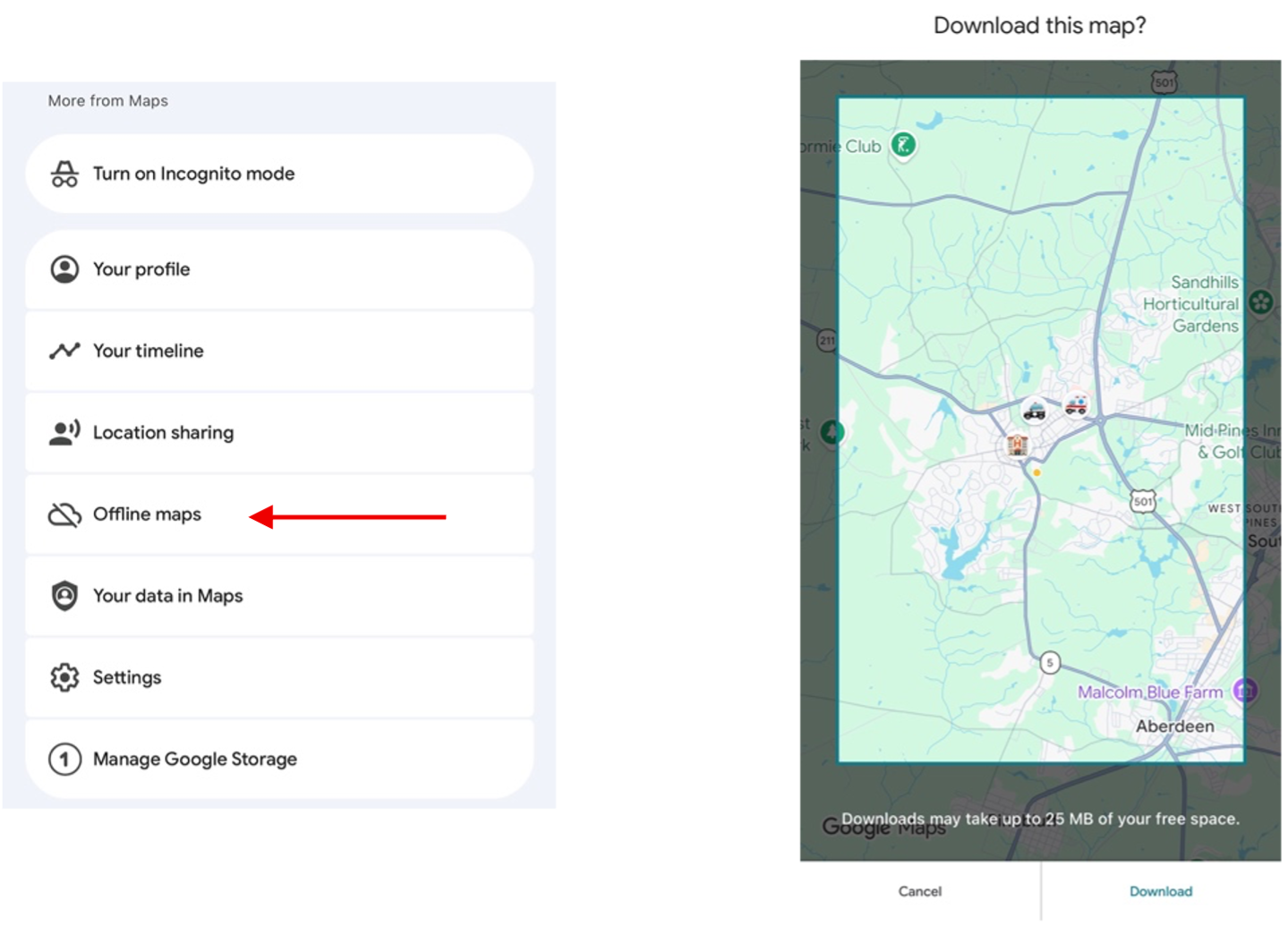
2. Create lists. Create different lists for different location types. Use icons so your brain instantly reads them on the map.
Even without cell service, you can navigate using offline maps + your pinned lists.
You can also create 1 list with all locations. The limitation: all pins look the same, but you can share the whole list easily.
3. Pin locations. Search for and pin key locations. For the Pinehurst example:
The hotel
Meeting locations
Emergency room
Police station
Restaurant for the business dinner
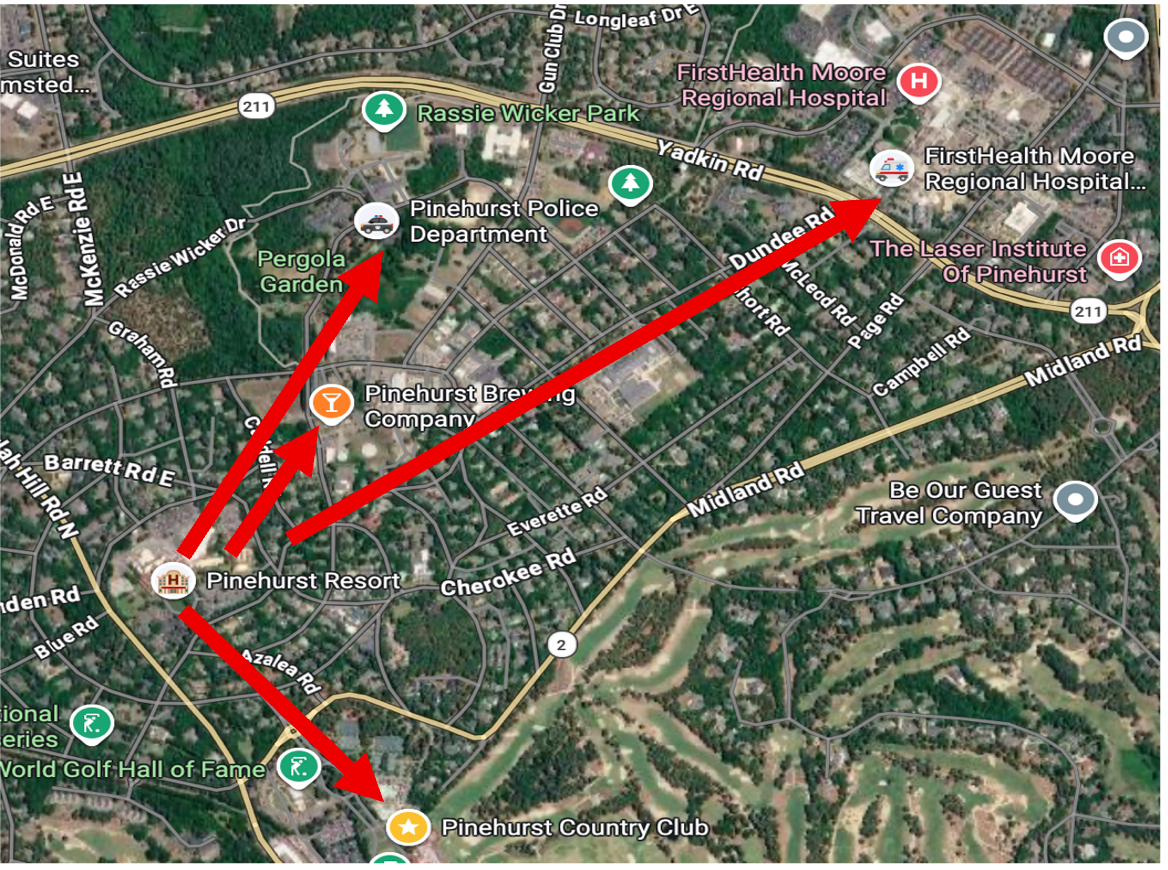
Keep it simple. The tool scales to fit your needs.
4. Share your locations. Share your lists with family, coworkers, or your travel team. Add multiple locations per list. If you use the 1-list option, sharing all locations at once is easier, but remember the limitation.
(There is a way to create one map with multiple different pin types, but we’re keeping things simple for today.)
—————————————————————————————————————————————————————————————————————
These are three basic concepts that worked for me. Everyone’s different, every trip is different. Find what works for you and build it into your process.
If you have questions on how to scale these concepts, implement them into your culture or policies, or discuss other tools and techniques for your people while traveling, feel free to reach out.